Understanding Ourselves: The Anglican Faith

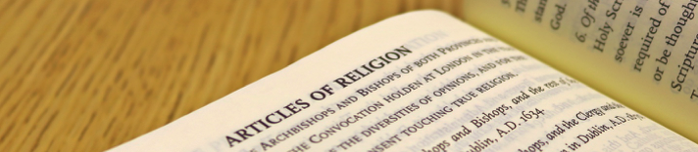
- Civil authorities do not have the role of ministering God’s Word or the Sacraments, but rather to rule all estates and degrees committed to their charge by God (Ecclesiastical or Temporal) and restrain evil doers. Other ecclesiastical authorities (Roman, Orthodox, etc.) do not have jurisdiction over the Anglican Church. Christians are subject to the laws of the country, including penalties, wearing weapons, and serving in war.
- Christian people’s goods are privately owned. However, Christians should liberally share with the poor and needy as they are able to.
- While vain and rash swearing is forbidden, a Christian may give an oath when a Legal Magistrate requires it for justice, judgment, and truth.
In Cranmer’s time (1500’s) there was a huge debate as to who had ultimate authority: the ruler(s) of the country, or the leader(s) of the church (it would have been between the King, or the Pope)? In naming himself as head of the church, King Henry VIII explicitly stated, “I have the authority – no one else.” This is noted in Article 37, though it is tempered in differentiating between civil and ecclesiastical authorities. In these last articles, Cranmer was writing that people within the church are still subject to the laws of the land and cannot use their presence in Christ’s body to avoid those laws – if they do, they should expect the ramifications of their disobedience as citizens of that country. This means that we should be deliberate and take the consequences into account, for sometimes we do judge we need to follow God rather than society (as per Acts 5:29)!
+David