Understanding Ourselves: The Anglican Faith

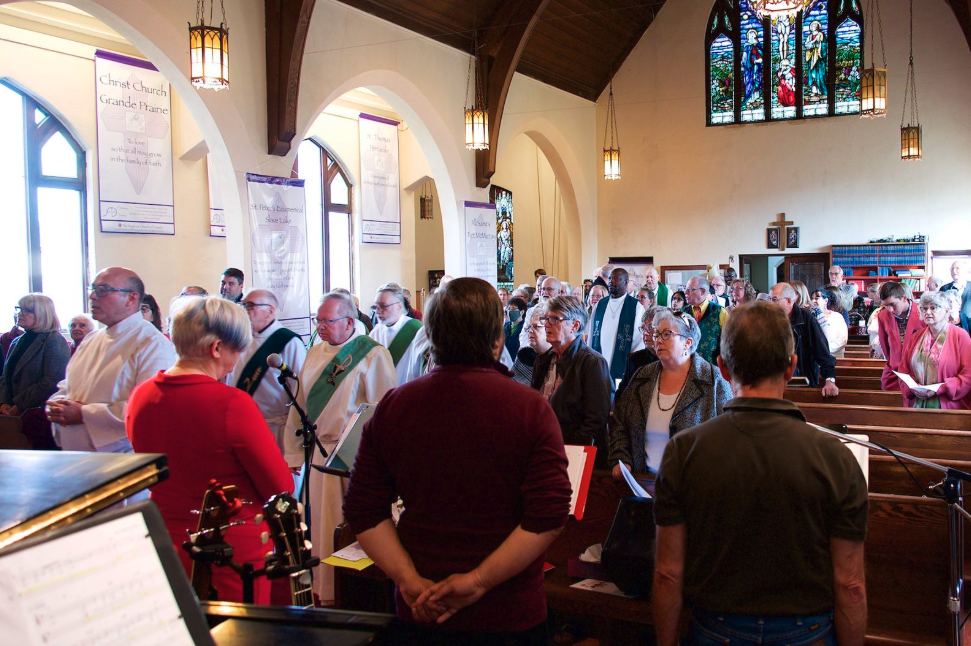
Why are our Synods structured the way they are?
First of all, our Synods are not simply business meetings. We are an assembly gathered before God to discern together how to faithfully participate in God’s mission.
We start with worship, because that reminds us who we are, before we decide what we are doing. Opening Worship relativizes all of our identities. Before anyone moves a motion or casts a vote, we gather as the baptized people of God. We hear Scripture. We confess our sins. We pray for the Spirit. At Eucharist we come to the same table and receive the same Christ.
So, opening worship is almost a theological declaration:
This Synod does not belong to us. The Church belongs to Christ. We therefore begin by placing ourselves, our disagreements, our ambitions and our decisions before God.
Under our diocesan Act of Incorporation, Synod determines significant matters of diocesan governance and what DEC should focus on. But our discernment needs a question prior to “What do we want to do?” The question is, “What is God calling us to do?”
Worship creates the proper orientation for asking that question.
There is also something particularly significant about Eucharist, or Holy Communion. Synod inevitably exposes difference. We debate. We amend. We vote. Sometimes 51% prevail over 49%. People can leave a decision disappointed or even hurt.
Yet at the altar we enact a reality deeper than the vote: we are one body because we share in the one Christ.
At Synod, amid elections, finances, workshops and governance, most of all, we have sharing, between each other and us and Christ.
Our communion therefore does not depend upon unanimous agreement. Indeed, celebrating Eucharist together is a powerful corrective to parliamentary procedure: the person who voted against me is still my brother or sister in Christ.
And that helps explain closing worship. Closing worship does something different from opening worship.
Opening worship gathers the Church. In closing worship we recommit ourselves, recognize each other, and send ourselves out into the world. Synod does not really culminate in adjournment, it culminates in mission.
We return to Fort Vermilion, Grande Prairie, High Prairie, Fort McMurray, Slave Lake, Athabasca, and everywhere between in the diocese carrying what has been discerned together back into the life of the Church and the world.
So, we gather, are formed by the Word, discern God’s will, are reconciled at the table, recommit, and are sent.
In other words, in a way the entire Synod is one extended liturgical movement.
The opening Eucharist says, “We belong to Christ.”
The deliberations ask, “Lord, what would you have your Church do?”
The decisions become commitments offered to God.
And the closing Eucharist says, “Now send us to live what we have discerned.”
Therefore, worship isn't something Synod does before and after its work. Worship tells us what the work of Synod actually is.
Synod is a real opportunity to worship, and to experience and share the love of Christ, with each other and then, the world.
All glory be to God!
+David